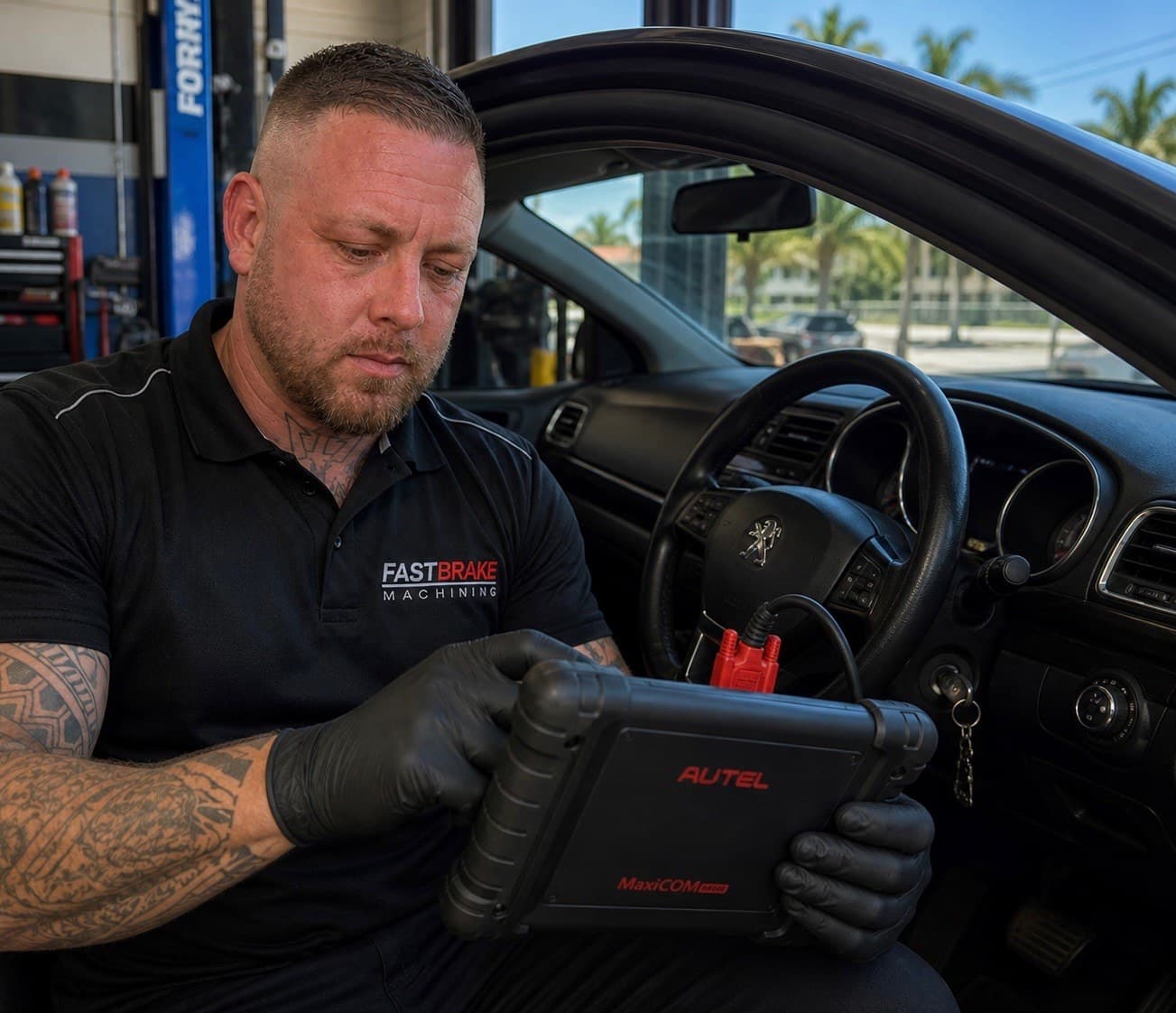
Diagnostics
Finding the fault, not guessing at it.
A warning light tells you something is wrong. It does not tell you what. That gap is where a lot of money gets wasted.
01What a fault code actually tells you
A stored code points at a circuit or a reading that is outside expected range. It does not name the failed part. A code that mentions an oxygen sensor can be a failed sensor, or it can be a wiring fault, a vacuum leak or an exhaust leak upsetting what that sensor reads.
Replacing the part the code mentions works often enough to be tempting and fails often enough to be expensive. Proper diagnosis means reading the codes, then testing to work out which of the possible causes is the actual one.
02When it is worth booking in
A light that has come on and stayed on. A light that flashes, which usually means stop driving. A car that has changed in how it starts, idles, pulls or uses fuel. A fault that comes and goes is still worth looking at, and it helps enormously if you can tell us when it happens: cold start, under load, after it warms up.
Detail narrows the search. The more precisely you can describe when the fault shows up, the less time it takes to find.
What helps
Tell us when it happens.
Diagnosis is a process of narrowing down. The detail you bring shortens it.
- 01Cold start, or once it has warmed up
- 02At idle, under load, or at a particular speed
- 03Every time, or only sometimes
- 04Whether anything was done to the car just before it started
- 05Whether the light flashes or stays on
- 06Any change in fuel use, starting or power

Warning light on?
Book it in at the Nerang workshop and we will find out what is actually causing it.